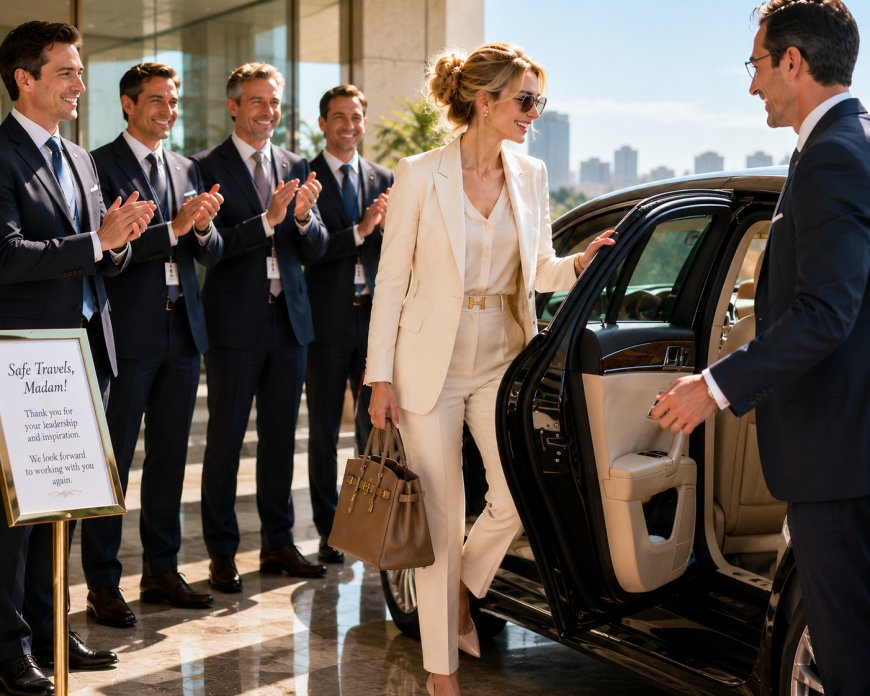
How Do You Want to Be Remembered When You Leave the Room?

The Quiet Power of Presence, Perception, and Legacy in Every Exit

How Do You Want to Be Remembered When You Leave the Room?

There is a moment—often unnoticed, almost invisible—when a person leaves a room.

The door closes. The footsteps fade. The conversation resumes.

But something lingers.

A feeling.
A memory.
An impression that either elevates—or disappears.

The question is not whether you will be remembered.
The real question is: how.


The Invisible Signature You Leave Behind

Every time you walk into a room, you carry more than your name, your title, or your attire. You bring an energy—a silent introduction that speaks before you do.

And when you leave, that energy doesn’t vanish.

It settles.

It becomes your invisible signature.

Some leave behind tension.
Some leave behind relief.
A rare few leave behind inspiration.

Those are the people others talk about after they’re gone—not because they demanded attention, but because they earned presence.


Presence Is the New Power

In a world overflowing with noise—digital posts, artificial intelligence, curated images—the rarest currency today is not attention.

It is authentic presence.

Presence is not about being the loudest voice in the room.
It is about being the most felt.

  • The one who listens when others wait to speak
  • The one who understands without needing explanation
  • The one who brings clarity instead of confusion

Presence is subtle. But its impact is permanent.


The Three Impressions That Define You

When you leave a room, people unconsciously ask themselves three questions:

  1. Did this person make me feel valued?
  2. Did this person add something meaningful?
  3. Do I want to encounter this person again?

If the answer is yes—even to one—you’ve already created a memory.
If the answer is yes to all three—you’ve created influence.


Style Fades. Substance Echoes.

Clothing can impress. Titles can command. Success can attract.

But none of these guarantees remembrance.

Because people rarely remember what you wore.
They remember how you made them feel.

The calm in your voice.
The conviction in your ideas.
The sincerity behind your words.

True impact is not visual.
It is emotional—and emotional memory lasts far longer than visual spectacle.


The Art of the Exit

There is a quiet elegance in leaving well.

Not abruptly. Not dramatically.
But intentionally.

The most memorable people don’t just enter rooms with purpose—they leave with it.

  • They conclude conversations with clarity
  • They acknowledge others with respect
  • They leave just enough silence behind to be felt

Because sometimes, the most powerful statement is not what you say while present…
but what people say about you when you are gone.


Legacy Is Built in Moments, Not Monuments, Noubikko said

We often think legacy is something grand—awards, achievements, headlines.

But in truth, legacy is built in smaller, quieter spaces:

  • A meeting
  • A conversation
  • A passing moment of attention

It is built room by room.

Exit by exit.

Until one day, your name carries meaning not because of what you claimed—
but because of what others experienced.


So, How Do You Want to Be Remembered?

As someone who filled the room?
Or someone who changed it?

As someone who spoke?
Or someone who connected?

As someone who was seen?
Or someone who was felt?

Because long after you leave, long after the conversations fade,
only one thing remains:

The imprint of your presence.

Noubi Says: Make it count.



The Art of the Exit

How to Leave a Room Like a Legend (Without Tripping Over the Carpet)


There are two types of people in this world:

  1. Those who leave a room…
  2. And those who make the room wish they stayed (or quietly celebrate that they didn’t)

The difference?
The Art of the Exit.

Because let’s be honest—anyone can enter a room.
Even the wrong person at the wrong party manages that.

But leaving?
Leaving is a performance.
A strategy.
A final statement.

And too many people get it painfully wrong.


The Bad Exit Hall of Fame (We’ve All Seen Them)

Let’s take a moment to appreciate the classics:

  • The Ghost
    Disappears without a word. One minute they’re holding a drink, the next—gone. People spend 15 minutes wondering if they evaporated or got abducted.
  • The Overstayer
    The party ended 45 minutes ago. The host is holding a broom. The lights are on. This person is still saying, “One last story…”
  • The Drama King/Queen
    Announces their exit like it’s a royal decree:
    “I MUST LEAVE NOW. MANY IMPORTANT THINGS AWAIT ME.”
    Nobody asked. Nobody knows what those things are.
  • The Endless Goodbye Artist
    Says goodbye… and then starts a brand-new conversation.
    Thirty minutes later: still at the door.

If you see yourself in any of these—don’t worry.
This is your redemption arc.


The Truth: Your Exit Is Your Last Impression

People forget what you said.
They forget your jokes (especially the bad ones).

But your exit?
That’s the final frame of your personal movie.

Mess it up, and you become a story.
Nail it, and you become a memory.


Rule #1: Leave Before You Become Background Noise

There is a magical moment in every gathering:

You’ve said something smart.
People laughed (hopefully at the right time).
Your energy is still fresh.

That’s your cue.

Stay too long, and you slowly transform from
“interesting person” → “still here?”

The best exits happen just before the decline.

Like a hit song that ends before you get tired of it.


Rule #2: Don’t Announce Like a Breaking News Alert

You are leaving a room—not launching a space mission.

Avoid lines like:

  • “EVERYONE, I AM NOW DEPARTING.”
  • “THIS WILL BE MY FINAL GOODBYE.”
  • “PLEASE REMEMBER ME.”

Instead, keep it smooth:

  • “Great seeing you—let’s catch up soon.”
  • “I’ll leave you to it, enjoy the rest.”

Simple. Elegant. No background music required.


Rule #3: Make People Feel Better Because You Were There

Here’s the secret most people miss:

The Art of the Exit is not about you leaving.

It’s about what people feel after you’re gone.

Did you:

  • Make someone laugh?
  • Add value to a conversation?
  • Show genuine interest?

If yes, congratulations.
You’ve just planted something rare—positive memory.

If not… well…
You were just another moving object in the room.


Rule #4: Leave a Little Mystery

The most memorable people don’t overstay their story.

They leave just enough unsaid that people think:

“That was interesting… I want more of that.”

Mystery creates curiosity.
Curiosity creates value.

And value?
That’s how you get invited again.


Rule #5: Walk Out Like You Have Somewhere Better to Be (Even If It’s Your Bed)

Confidence is not loud.
It doesn’t need explanation.

A great exit says:

“I enjoyed this—but my time is valuable.”

Even if your next destination is:

  • Your couch
  • Your fridge
  • Or a deep, meaningful relationship with your pillow

Walk out like you’re heading to something important.

Because you are.


The Legendary Exit Formula

Here it is—simple, powerful, unforgettable:

Engage → Contribute → Connect → Exit

No dragging.
No drama.
No disappearing act.

Just presence… followed by a clean, confident finish.


Final Thought: Be the Person They Notice When You’re Gone

The room will keep moving.
The music will continue.
The conversation will shift.

But the right exit creates a pause—just a second—where someone thinks:

“That person… had something.”

And that’s it.

That’s the win.


Noubikko said: Because in life, just like in rooms,
it’s not how long you stay…

It’s how well you leave.